How to hire the right app developer for your project

How to hire the right app developer for your project

in App Development, Blog with Comments Off on How to hire the right app developer for your project by

How to hire the right app developer for your project

Making the decision to develop a new mobile application can be both exciting and challenging. Hiring the right app developer is a crucial factor in the success of the project — but it doesn’t have to be a daunting task. Here is everything you need to know. 

Mobile development hiring guide Covering iOS, Android, native, hybrid and web app development 

Swift Kotlin Agile React Native Mobile Development Flutter iOS 

Understanding your business needs

Before diving into the technical aspects of development, it is important to first clearly define your business needs and know what you want your app to do. Identifying this upfront will help you determine what type of app developer you need, and ensure that both you and the potential developer have a common understanding of the project’s goals and scope.

If you already have a clear idea of what you want, look for developers who have experience creating apps with those features. If you are not yet sure what you want, look for generalist developers who have a wide range of experience creating all kinds of apps.

Consider the following questions as you shape your brief:

  • What functionality is essential for your app?
  • Who is the primary target group?
  • How should the app differentiate itself from the competition?
  • Why are you making the app, and what do you want it to achieve for your business?

Make a list of the features and capabilities you want in your app. Documenting your app requirements can also help developers give you more accurate cost and time estimates, and will help you filter out developers who are not a good fit for your project.

What good answers look like

Once your needs are defined, the next step is to understand your development options. This means understanding the difference between native app development, web app development, and hybrid app development — and how each one affects which type of developer you need to hire.

Native app development means that an app is built specifically for one type of operating system, such as iOS or Android. Web apps are created using HTML, CSS, and JavaScript and can be used on any device with a web browser. Hybrid mobile apps are a mix of the two, using HTML, CSS, and JavaScript wrapped in a native app shell, which allows them to be used on any device while being built like a native app.

Knowing your app development options will help you decide whether you need an Android app developer, an iOS app developer, or someone who can do both.

Assessing technological expertise

Once you have identified your needs and understood your development options, the next step is to assess the developer’s technological expertise. A thorough assessment of the developer’s technological background can protect your business from potential technical pitfalls and ensure a reliable solution.

A skilled iOS developer must have a solid knowledge of Swift and Objective-C, as well as experience with Apple’s developer tools and frameworks. More broadly, good mobile app developers should demonstrate the following technical skills:

Coding languages

Extensive experience with the relevant coding languages for the platform they are building on.

Design patterns

Understanding of design patterns and principles that lead to scalable, maintainable code.

SDKs & IDEs

Ability to use various software development kits and integrated development environments such as XCode for iOS or Android Studio for Android.

Platform knowledge

Knowledge of multiple platforms — iOS, Android, Windows — or at least one platform in depth.

App store experience

Understanding of app stores and how to submit apps correctly.

Soft skills

Effective communication, problem solving, and time management — essential for a smooth working relationship.

When reviewing candidates, check out their past projects to gain insight into their technical skills and style. Consider whether the developer has experience with similar projects, what technologies and tools they use, and how they handle complex issues.

Tailor-made solutions and creativity

Every business will have specific needs, which is why it is crucial that your app developer can deliver tailored solutions. Creativity in the development process can often make the difference between an ordinary app and a great one.

When evaluating potential developers, consider whether they can adapt their approach to your unique requirements, and whether their previous projects demonstrate an innovative approach to problem-solving. Choosing a developer who can think outside the box will help your app stand out and optimise the user experience.

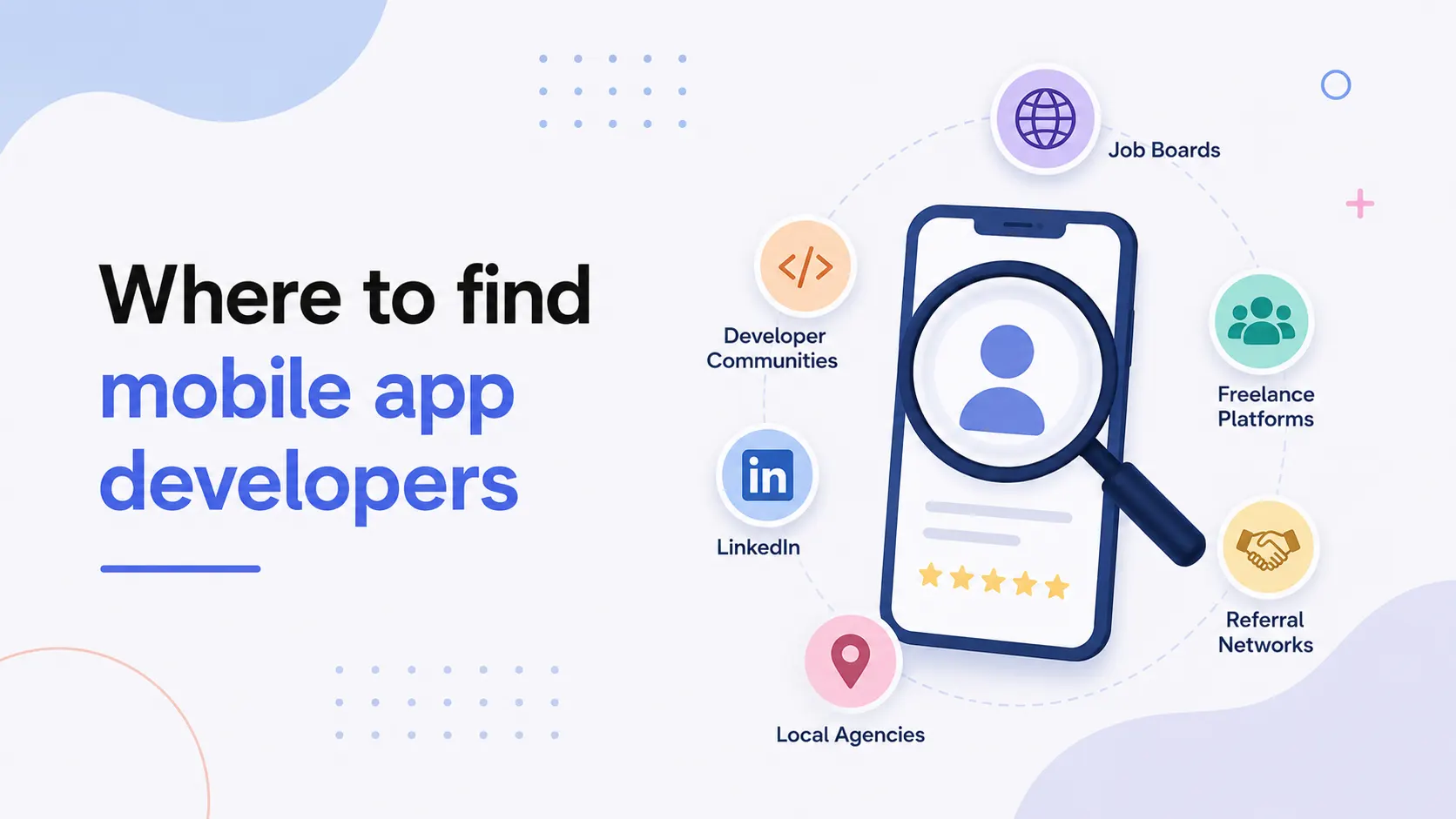
Where to find mobile app developers

Once you know what skills you need, it is time to start your search. App development is time-consuming and an expensive task, so avoid hiring cheap freelance app developers as you may not get the results you want.

You can find developers by searching portfolios and profiles online, or by attending app development conferences. Hiring highly qualified app development specialists as consultants or independent contractors can be a great way to get the quality app you want without having to commit to a long-term development relationship.

You can find highly qualified mobile developers on online marketplaces like Onsiter, or you can save time and ask consulting agencies like Right People Group to help you find the right expert for your project. Research and hire a developer who has created similar apps to the one you want, and be sure to read online reviews from other customers to get a sense of their work ethic and professionalism.

Communicating your project goals clearly

Whether you are looking for app developers yourself or using the help of an agency, it is important to be clear about your project goals from the start. This means having a clear idea of what you want your app to do, as well as your budget and timeline.

Be prepared to answer questions about your project, such as why you are making the app and who your target audience is. It is also helpful to have a non-disclosure agreement (NDA) in place before you start sharing details about your project, in order to protect your ideas.

Interviewing app developers

Once you have a list of potential app developers, it is time to interview them. This is your opportunity to get to know them better, see if they are a good fit for your project, and assess both their technical and communication skills.

During the interview, be sure to ask about their experience with similar projects, their app development process, and their thoughts on your project goals. You can also ask for examples of their work and references from past clients. If you are working with an agency, they should be able to provide you with a list of app developers they have worked with in the past.

Pay attention to soft skills too. Ask yourself: does this person seem like someone you can work with long-term? Are they good at communicating? Do they seem capable of handling difficult problems? A developer who acts as a collaborative partner can help ensure that the project runs smoothly and achieves the desired results.

How does the developer communicate with past customers? Are they able to give constructive feedback? These questions matter just as much as any technical assessment. If you ask the right questions during the interview process, you can hire the best app developer for your project.

Reliability and long-term support

Once your app is launched, reliability and ongoing support are essential to its continued success. A reliable app developer will offer solutions that ensure the app runs smoothly, while also being prepared to handle any technical glitches that may arise. Reliability gives your users a seamless experience, which can strengthen their trust in your company.

Consider the following before signing any contract:

  • What kind of support does the developer offer after launch?
  • Do they have a proven track record for operational reliability?

Onboarding your app developer

Once you have found the right app developer, it is time to onboard them to your project. This process varies depending on whether you are working with an individual consultant or an agency.

If you hire an individual developer, send them a contract that outlines the scope of work and the agreed-upon price. Once the contract is signed, you can start sharing project details and giving them access to the necessary tools and resources.

If you are working with an agency, they likely have their own onboarding process that they follow. This may include a sign-up process on their website as well as sending you a contract to review and sign. Once the contract is in place, the agency will start matching you with potential app developers and arranging interviews.

Key takeaways

  • Clearly define your business needs, target audience, and required features before approaching any developer.
  • Understand the difference between native, web, and hybrid development so you know what kind of developer to look for.
  • Assess technological expertise thoroughly — review past projects, check for platform knowledge, and verify SDK and IDE experience.
  • Prioritise developers who can deliver tailored, creative solutions and adapt to your unique requirements.
  • Avoid cheap freelancers; look for qualified specialists via reputable marketplaces or consulting agencies.
  • Have an NDA in place before sharing project details, and be clear about budget and timeline from the start.
  • Evaluate soft skills — communication, problem solving, and collaboration — as seriously as technical ability.
  • Confirm post-launch support and operational reliability before signing any contract.
  • Use a formal onboarding process with a signed contract outlining scope and price before sharing any project access.
Read more
How do you find an app developer?

How do you find an app developer?

in Blog with Comments Off on How do you find an app developer? by

How do you find an app developer?

How to Find an App Developer What is an App Developer The definition of an app developer is actually very concise. They are the people who create apps for…

What is an app developer?

The definition of an app developer is actually very precise. They are people who create apps for smartphones, tablets, and other devices. However, what they do to achieve this goal goes far beyond creating code.

There are many different types of app developers, so it’s important to understand their core competencies before hiring one for your project. For example, there are iOS developers who work on programs for Apple devices like iPhones and iPads, Android developers who build applications designed specifically to run on Google’s operating system, Windows Phone coders who specialize in that platform, or HTML5/CSS3 programmers who create web-based software compatible with any device running a web browser.

When you choose an app developer to work on your project, their role can be as much about design and user experience as it is about programming. Depending on the type of application you want built, they may collaborate with graphic designers, artists, or marketing experts to achieve the desired results.

However, once a mobile app has been created, it needs to be published, which is where a whole different set of skills come into play. To have a competitive advantage over other apps for smartphones and tablets, it needs to be listed in multiple places, including Apple’s App Store for iOS devices and Google Play for Android products. These are highly competitive marketplaces, so developers need marketing and promotion skills along with their technical abilities.

If there are multiple developers, programmers, and designers, or if there are experts in app marketing or any other field related to creating mobile applications for smartphones and tablets, they all fall under the same category – they are all app developers.

How to find a reliable app developer?

Once you have done your research and chosen the type of app developer you want to work with for your project, it is important to find a reliable person or company. The best way to do this is by checking out their previous work and getting feedback from others who may have used them in the past.

By choosing the right candidate or company, you will get someone with experience who knows how to present their work to compete for downloads and sales. They will also be able to provide all the necessary technical know-how along with marketing skills such as SEO (Search Engine Optimization), pay-per-click campaigns and social media marketing.

In addition to knowing how to market your app online, they should also be aware of offline strategies like press releases, direct mail, and events. After all, you want the world to know about your product, but it’s important that they do their research to determine which channels are likely to yield the best results.

If your app developer or company understands how today’s market works, they should also be able to break down costs into hourly rates, flat rates, or even performance-based fees if unexpected issues arise during the development of your app. Not only will they know what types of apps are most popular with the public right now, but they will also have experience working on similar projects.

The bottom line is that hiring an excellent app developer can save you time, money, and headaches because they have one goal – to get your product developed quickly while getting it noticed by the public. In addition to knowing how to market their products, they should also know what makes a successful app and how to take it from concept all the way through to launch events.

There are many benefits to hiring an app developer or company, so keep looking until you find one that can meet your requirements while staying within your budget.

Benefits of hiring an app developer

If you’re looking to hire an app developer, keep reading because we’ll tell you why it’s worth searching for one who can meet all your requirements and stay within your budget. By understanding what makes a successful product and how to best market it to get noticed, they should also be able to provide you with some great ideas along with the technical know-how needed to turn them into reality.

Once you have chosen an app developer or company, ask them if they can provide references from past clients who were satisfied with their work. This will give you an idea of ​​the quality of their service as well as whether they were able to complete projects on time, stay within budget, and fulfill all promises. If they can’t provide references, they may not be willing to give up some potential business to provide contacts. So keep looking until you find someone who is willing to do everything they can to ensure your product is successful from the start.

While many app developers and companies work on an hourly rate, there are others who charge a flat fee for their services, so make sure you know what types of payment methods they accept before you give them your contact information or send any money. You don’t want to hire someone and only find out later that they’re going to cost more than you expected because they use different rates for different types of contracts.

Anyone who has experience creating apps will understand how difficult it can be, especially when you’re starting from scratch and aren’t even sure what type of app you want to create. If that’s the case, it’s up to your app developer or company to come up with ideas that can be translated into a product that’s well-received by the public. Not only do they need to understand how apps work, but they also need to know what makes a successful product and how to best market it to get noticed.

In addition to having experience in creating apps, an app developer or company should also be able to know what makes a good app, along with understanding market developments, which means they already have some good ideas for new products. It may take longer than usual, but sometimes you have to put quality of service ahead of a quick turnaround time.

Any good app developer and company should have a portfolio showing some of the apps they’ve created to give you an idea of ​​the type of work they do. If not, ask yourself why not, because it’s important for potential clients to get a sense of your ability before parting with their cash. Additionally, any company that promises the world but can’t back up its promises with real-world examples will only disappoint you in the end.

Don’t expect all freelance app developers and companies to charge by the hour, as there are others who prefer flat rates or even contingent fees when things take longer than expected. With flat rates, both parties know what the total cost is going to be before you agree to a contract, while contingent fees usually depend on how successful your product is. Of course, this also means you’ll have to pay more if it turns out to be a failure, so make sure all terms and conditions are explained in detail before you sign a contract.

Regardless of the type of payment methods an app developer or company uses, it’s always worth checking to see if they include all costs up front, even when there may not seem to be any hidden costs. This is because some developers and companies add extras that may be difficult for you to discover until after the contract has been accepted. Always make sure that everything covered by their services is included in the price, along with getting a copy of all terms and conditions, just in case something is missing.

Hiring an app developer or company can be one of the best decisions you ever make, but only if they provide the service you need. The most important thing to remember is that there are plenty of options out there, so don’t rush your decision because you won’t get a second chance. Take your time to find someone who is deserving, while also finding a price that fits your budget, that way neither of you will end up disappointed.

How much does it cost to develop an app?

If you are wondering how much it costs to develop an app, you should consider your options when looking for the right person or company. This involves finding someone who has a proven track record of creating successful apps, while also getting a feel for their pricing structure to determine whether or not they are affordable. One of the most important things you need to know is that there will be hidden costs, and while this may not seem like the case at first, it will become more noticeable once you enter into a contract with them. Always make sure that nothing is lost because it could end up costing you more than you expected if the terms and conditions are not clear.

Mobile app developers and companies offer all kinds of services such as design, app development, testing, and maintenance, so you need to make sure that they can do what you want before you part with your money. In this regard, having a portfolio of apps they have created is a great way for them to showcase their skills while also giving potential clients an idea of ​​the type of services they provide. With this in mind, it is always worth asking if they include any additional charges, just in case something has been overlooked from the price or if there are any hidden costs. Their terms and conditions should also be explained clearly so that you understand everything from start to finish.

A common misconception among most people is that when hiring app developers, companies charge by the hour because some prefer flat rates. This method works both ways because you know exactly what the final cost will be, while also being combined with a guarantee that all services are included. This means that there are no unexpected fees, which can occur when things take longer than expected because it is an agreement between the developer or company and the client. However, some companies prefer to use contingent fees in case your product is not as successful as it could have been, so make sure to read all their terms and conditions.

For most people, hiring a freelance app developer or company sounds like a daunting task, but if they deliver on everything, this is one of the best decisions you could ever make. The most important thing to remember before parting with your money is that there are plenty of different options out there, so don’t rush your decision because you won’t get a second chance. Their terms and conditions should also be fully explained, which is why it’s always worth asking if they include any additional fees, just in case something has been overlooked from the price or if there are any hidden costs.

In conclusion, how much it costs to develop an app will depend on the service you need from the developer or company, as well as your budget. This involves finding someone who can do everything you want while ensuring that nothing is lost from their services. Their terms and conditions should also be fully explained so that there are no misunderstandings when you contract with them. With this in mind, how much it costs to develop an app will vary depending on the service you need, so make sure that nothing is lost before you part with your money.

Read more
What to Ask When Hiring an App Developer (Even If You’re Not Technical)

What to Ask When Hiring an App Developer (Even If You’re Not Technical)

in App Development, Blog with Comments Off on What to Ask When Hiring an App Developer (Even If You’re Not Technical) by

What to Ask When Hiring an App Developer (Even If You’re Not Technical)

You don’t need to be a software engineer to hire a good one. The right questions reveal whether a developer can deliver or just talk a good game.

Picture this: your organisation decides to build an app. You’re the “tech person” — or at least, the closest thing to one — so the task of vetting the developer lands in your lap. You’re not an app developer. You’ve fixed a few computers, maybe built something small in a class. Now you’re across the table from someone who speaks in frameworks and deployment pipelines.

It’s a familiar situation for many people in small organisations. The good news? You don’t need to understand code to ask the right questions. In fact, the most important things to probe have nothing to do with syntax.

Start with the portfolio

Before any meeting, ask to see their previous work. A strong developer will have a portfolio of finished apps — ideally available on the App Store or Google Play. Look for projects similar in scope or domain to yours.

In the meeting, don’t just nod at screenshots. Ask them to walk you through the development process of one of their projects: what challenges came up, how they solved them, what they’d do differently. How they explain their own work tells you a great deal about how they’ll communicate with you throughout yours.

Consider this

If you have a technical contact — even a friend studying computer science — ask whether they’d be willing to sit in on the conversation. An extra set of informed eyes is invaluable when you’re evaluating someone outside your own expertise.

The questions that really matter

Forget brain teasers and whiteboard problems. For a small organisation hiring a single developer, the most revealing questions are about planning, communication, and accountability.

  • How will you communicate your progress to us? Daily updates? Weekly milestones? Ask them to propose a structure — and watch whether they can define specific, demonstrable checkpoints.
  • Given this project, what’s your time estimate for the full build? A good developer won’t give you a number off the top of their head. They’ll ask for time to review the spec, and then come back with a broken-down estimate.
  • How would you divide this project into phases? Can you walk us through each one and give time estimates per section?
  • How far in advance will you let us know if a deadline is at risk?
  • What are the expected costs — broken down between labour and any infrastructure, licences, or third-party services?
  • What ongoing maintenance will be required after launch? Will the infrastructure scale if user numbers grow?
  • How will bugs be handled post-launch? What does your process look like when something breaks?
  • Have you submitted apps to the App Store or Google Play before? Are you comfortable handling that process?
  • Can you explain the core technical approach in plain language — as if explaining it to someone non-technical?

What good answers look like

The strongest candidates won’t bluster through uncertainty. They’ll acknowledge what they don’t yet know, commit to finding out, and give you a timeline for getting back to you. Estimation is a genuine skill — the best developers can break a project into components and give you reasoned numbers for each one. 

Green flag: “I’d need to look at the full spec before giving you a firm number. Can I take a few days and come back with a phased breakdown?” — This shows maturity and honesty. 

Red flag: “It’ll take a couple of months.” — Vague, uncommitted, and shows no instinct for structured delivery. 

Red flag: “You’d really need to be a developer to understand why I can’t answer that.” — A strong developer can translate technical constraints into plain language. If they won’t, that’s the whole interview right there. 

If you’re still unsure

Third-party technical screening services — such as Karat — exist specifically for situations like this. They provide experienced engineers to conduct technical vetting on behalf of companies that don’t have that capacity in-house. If budget allows and the stakes are high, it’s worth exploring. 

Alternatively, a small paid trial task — fixing a minor bug in an existing project, for example — gives you a concrete sample of their work before you commit. 

The bottom line 

Technical interviews are only one part of hiring a developer. For small organisations, communication style, transparency about uncertainty, and structured thinking about delivery are often more predictive of success than any specific framework knowledge. Ask the questions above, and trust your read on how they handle the ones they can’t immediately answer.

Read more
How Much Does it Cost to Develop an App?

How Much Does it Cost to Develop an App?

in Blog with Comments Off on How Much Does it Cost to Develop an App? by

How Much Does an App Cost in South Africa?

An app typically costs between R45,000 and R1,250,000 in South Africa. At IsolveMobility, most of the mobile apps we build range between R150,000 and R650,000, depending on the complexity, platform, and integration requirements. If it’s a very large or enterprise-grade app, the cost could exceed R1.25 million.


In South Africa, app development costs can range widely based on complexity, platforms, and development models. At iSolve Mobility in Johannesburg, we have worked with a wide range of businesses—from fast-moving start-ups to large enterprises—and we understand that determining the cost of an app is often one of the first and most important questions.

On average, it takes 5 to 20 people approximately 3–6 months to develop a mobile application, depending on its complexity. Experienced teams of designers, developers, and analysts with the right tools command daily rates of R2,000 or more. The choice of platform—iOS, Android, or both—also significantly affects the cost.

Examples of What an App Costs

App development costs a maximum of R950 per hour, but when we develop large app projects, the price will be between R650 and R850 per hour. The specific price depends on how big the app project is.

The mentioned hourly rates apply to all our experts regardless of their seniority level or domain (project managers, team leaders, software architects, senior developers, etc.).
90% of the apps we develop for our customers are made under a fixed price agreement. We make a thorough assessment of how many hours we expect to spend on developing an app. The expected number of hours is multiplied by our hourly rate (which depends on the size of the project). After this, you receive a fixed price for app development. This price is 100% binding on our part.

Here are some examples of what it costs to have an app developed:

Price of a Small App

Cost: R45,000 – R90,000

Time: 100 – 200 hours @ R950/hour
Features: The app contains few screens where some content is presented. It uses few or none of the phone’s functions (Bluetooth, camera, GPS, etc.). There is no control panel from which to control the app, and no integrations to other systems.

Price of a Medium App

Cost: R95,000 – R375,000

Time: 250 – 1,000 hours @ R950/hour
Features: The app contains several screens where content is presented. It uses multiple phone functions (Bluetooth, camera, GPS, etc.), includes a moderately advanced control panel, and may integrate with other systems.
In local terms, these are typically apps for businesses seeking to streamline operations or deliver richer customer experiences.

Price of a Large App

Cost: R390,000 – R750,000

Time: 1,300 – 2,500 hours @ R900/hour
Features: The app contains many screens with content and uses several of the phone’s functions. It has a comprehensive control panel and system integrations.

Price of a Very Large App

Cost: R800,000 – R1,250,000+

Time: 3,200+ hours @ R750/hour
Features: This type of app includes numerous advanced content screens, uses many phone functions, features a complex control panel, and requires advanced integrations to external systems. Such apps might include platforms with real-time data sync, offline support, advanced user roles, or integrations into legacy systems.


What Affects an App Development Price?

Many factors influence the cost of an app, but in general, the more hours development takes, the more expensive the app. To answer the question “how much does an app cost,” you must look at the number of hours required.

There are four primary elements that affect app pricing:

  • The design of the app
  • The app features
  • The devices the app must support
  • The technology in which the app is developed

Businesses should also consider:

  • Number of platforms (iOS, Android, web)
  • Type of app (static, dynamic, database-driven, or game)
  • Number of screens required
  • Backend requirements and third-party integrations
  • Post-launch costs (support, hosting, updates, marketing)
For example, game apps and database-driven tools typically require more custom development, advanced APIs, and unique user interfaces—all of which push up development time and price. More complex features and broader support requirements inevitably raise costs.


Fixed Price on App Development

We always recommend developing an interactive, clickable prototype before starting full app development. This prototype allows you to test your idea with stakeholders—such as users, customers, colleagues, and investors—before writing any code. It provides a visual and interactive simulation of the final app, including real designs, content, animations, and navigation flows, but without backend functionality.

While a prototype cannot access mobile features like the camera or GPS, it can mimic those interactions using predefined visuals to illustrate intended behaviour. This realistic user journey helps clarify the app’s structure and functionality.

Once the prototype is complete, we can accurately estimate the required development hours and provide a 100% fixed price and delivery timeline. It also ensures stakeholder alignment, reduces costly revisions, and enables more efficient project planning and budgeting.


Requirement Specification

Preparing a requirement specification is essential before beginning app development. This document outlines exactly what you, as the customer, are purchasing—and just as importantly—what you are not.

Traditionally, requirement specifications were lengthy, technical documents filled with abstract descriptions and basic screen illustrations that were not pixel perfect. This made them difficult to understand without an IT background or prior experience in software projects.

We’ve adopted a more user-friendly approach. Our requirement specifications are designed to be clear and accessible to everyone, including those with no technical expertise. They consist of two key components: a pixel-perfect, clickable prototype that visually represents every screen of the app, and a short, illustrated text document that explains any technical aspects not visible in the prototype.

Prototype

The prototype is the core component of our requirement specification. It includes all the screens your app will contain and is fully clickable, allowing you to experience the app’s structure and flow. Each screen is designed in pixel-perfect detail, so you’ll know exactly what you’re getting before development begins. This visual format ensures clarity and accessibility for everyone—without the need for complex technical documentation.

Text Document with Accompanying Illustrations

Alongside the prototype, we provide a short text document that explains aspects of the app not visible in the visual design—for example, the type of database used. This document is supported by relevant illustrations and written in plain, non-technical language so that anyone can understand it, regardless of their technical background.

The Overall Requirement Specification

Our complete requirement specification consists of two components: a pixel-perfect, clickable prototype and a concise text document with supporting illustrations. This approach ensures that the specification is easy to understand—even for clients with no prior experience in app development.
We create the specification in close collaboration with you. In the initial phase, you share your app’s purpose, goals, desired features, and functionality. From there, we combine your business insight, industry knowledge, and audience understanding with our app development expertise to shape the requirements.
As the specification evolves, we present you with tangible outputs at each stage. You can provide feedback, suggest changes, and request additions—which we incorporate until the final version fully meets your expectations.

Once approved, the requirement specification clearly defines what will—and will not—be delivered. This clarity allows us to provide a precise fixed-price quote and an accurate project timeline.


What Is the Cost of Native App Development Compared to Cross-Platform App Development?

Before we answer the question “what does native app development cost compared to cross-platform app development?”, it is important to understand the difference between the two technologies.

What Is Native App Development?

When developing a native app, it is only compatible with the operating system for which it was developed. It can either be iOS or Android. If you want the app to work on both iOS and Android, you need to develop two separate apps.

When developing native apps, there are no limitations and anything is possible.

When we develop the iOS app, we do it in the programming language Swift (we can also develop in Objective C if you wish). When we make apps for Android, we do it in Kotlin (we can also develop in Java if you wish).

What Is Cross-Platform App Development?

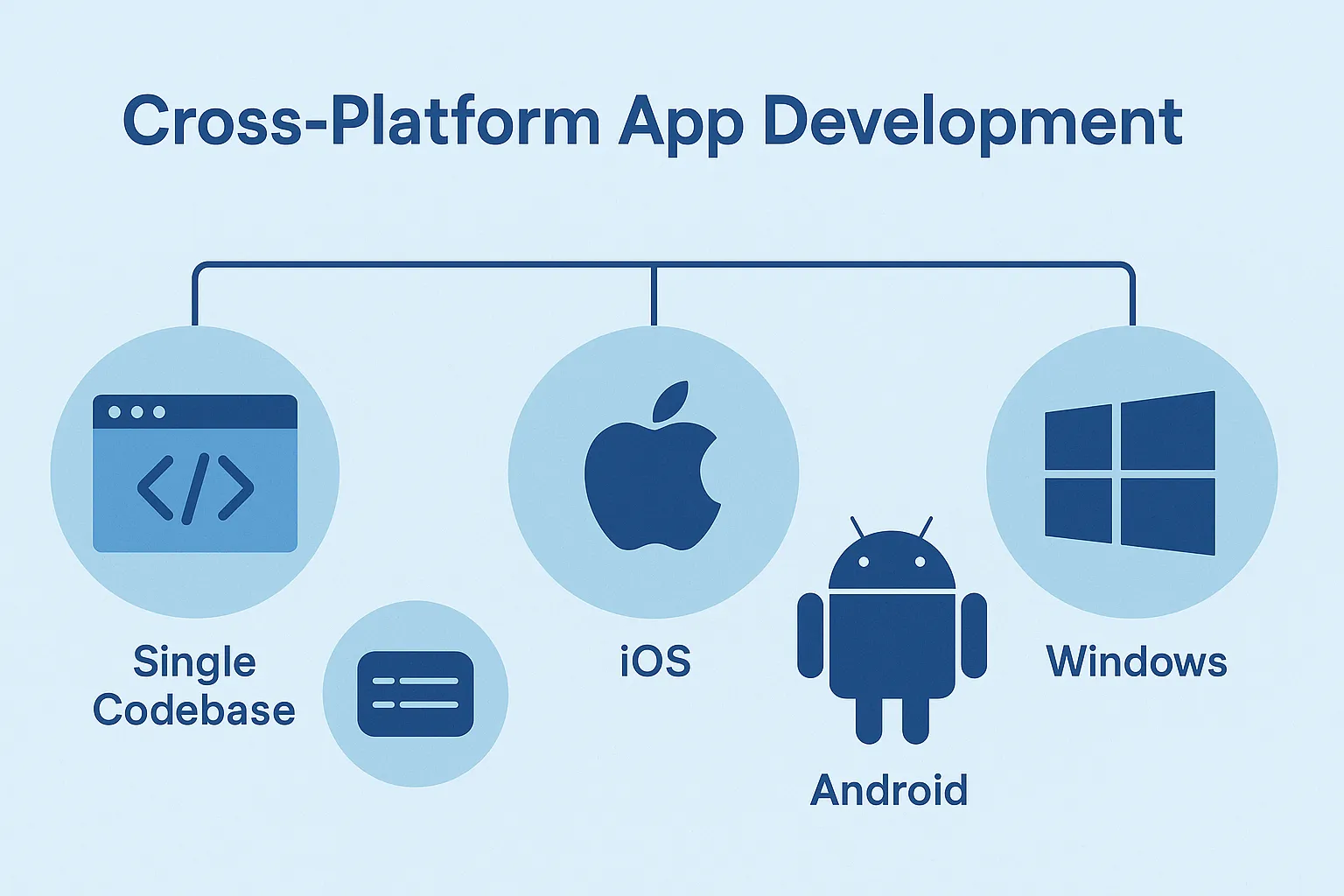
Cross-platform app development is a modern approach that allows a single codebase to run on both iOS and Android. Instead of building two separate apps, you develop and maintain just one—saving both time and cost.

To explain how this works, think of it like Google Translate: you write text in Danish, press a button, and instantly get a version in English, Spanish, or German. Similarly, with cross-platform frameworks, your development tool can generate both Android and iOS versions of the app from a single source code.

Popular technologies for cross-platform development include Microsoft MAUI (previously Xamarin), React Native, and Flutter. At iSolve Mobility, we have extensive experience with MAUI/Xamarin and also offer development in React Native and Flutter, depending on your needs and preferences.

What Is the Price Difference?

Cross-platform apps are generally much more cost-effective to develop than building two separate native apps for iOS and Android. However, there are certain limitations. Cross-platform technologies are less suited for performance-intensive applications like mobile games, or apps that require advanced features such as virtual or augmented reality. In such cases, native development typically delivers better performance and deeper hardware integration.

When a project is suitable for cross-platform development, we usually recommend it because it’s more affordable to build and maintain. However, we always conduct a detailed assessment to determine the best approach. If native development is the better fit based on your app’s goals and technical requirements, we will recommend that route instead.
The choice between native and cross-platform should be guided by the specific needs of your project. For example, apps like Facebook and Instagram use cross-platform frameworks, while performance-driven apps like Spotify and Pokémon Go are developed natively.

The decision often comes down to available resources and long-term objectives. Cross-platform development provides a faster, more affordable route to market—especially ideal for MVPs or internal tools. Native development, while more costly, remains the best option for feature-rich apps

How Much Does an MVP App Cost?

Many respected business strategists advocate starting with an MVP (Minimum Viable Product) when developing an app. One of the most prominent proponents is Eric Ries, who outlines the value of MVPs in his bestselling book The Lean Startup. At iSolve Mobility, we strongly support this approach.

An MVP is a strategic way to minimise risk and maximise learning. It allows you to build only the most essential features needed to test your app’s core concept with real users—before investing time and money into full-scale development. This avoids the common pitfall of developing features that seem valuable in theory but are ultimately not used or needed.
By launching a simplified version of your app, you can gather actionable feedback early and use it to iteratively improve your product. This process not only speeds up time to market but also helps confirm whether there’s genuine demand for your app.
Developing an MVP also reduces costs. With fewer features to build, development hours—and expenses—are significantly lower. This is especially important for start-ups or companies with limited budgets.

An MVP is not the final product, but rather a starting point for learning and validation. It helps answer critical questions such as: Is there a real market for this app? Will users engage with it? Which features do they value most?

Once user feedback is collected and analysed, you can refine and scale your app based on real-world insights—ensuring better alignment with user needs and greater long-term success.

In short, an MVP offers a cost-effective, low-risk pathway to launching a functional product while gaining valuable data from your target audience.

The Price of an MVP App

The cost of your MVP app depends entirely on how many hours are required for development. For instance, if it takes between 100 and 200 hours to build, the total cost will range from R45,000 to R90,000.

In the South African market, MVP development typically ranges from R0 to R225,000, depending on the complexity of the app and the number of essential features included. This makes MVPs an ideal option for start-ups and innovators working within limited budgets who still want to validate their ideas and enter the market quickly.

If you’d like a customised estimate for developing your MVP, feel free to get in touch with us.


Pricing Models for App Development

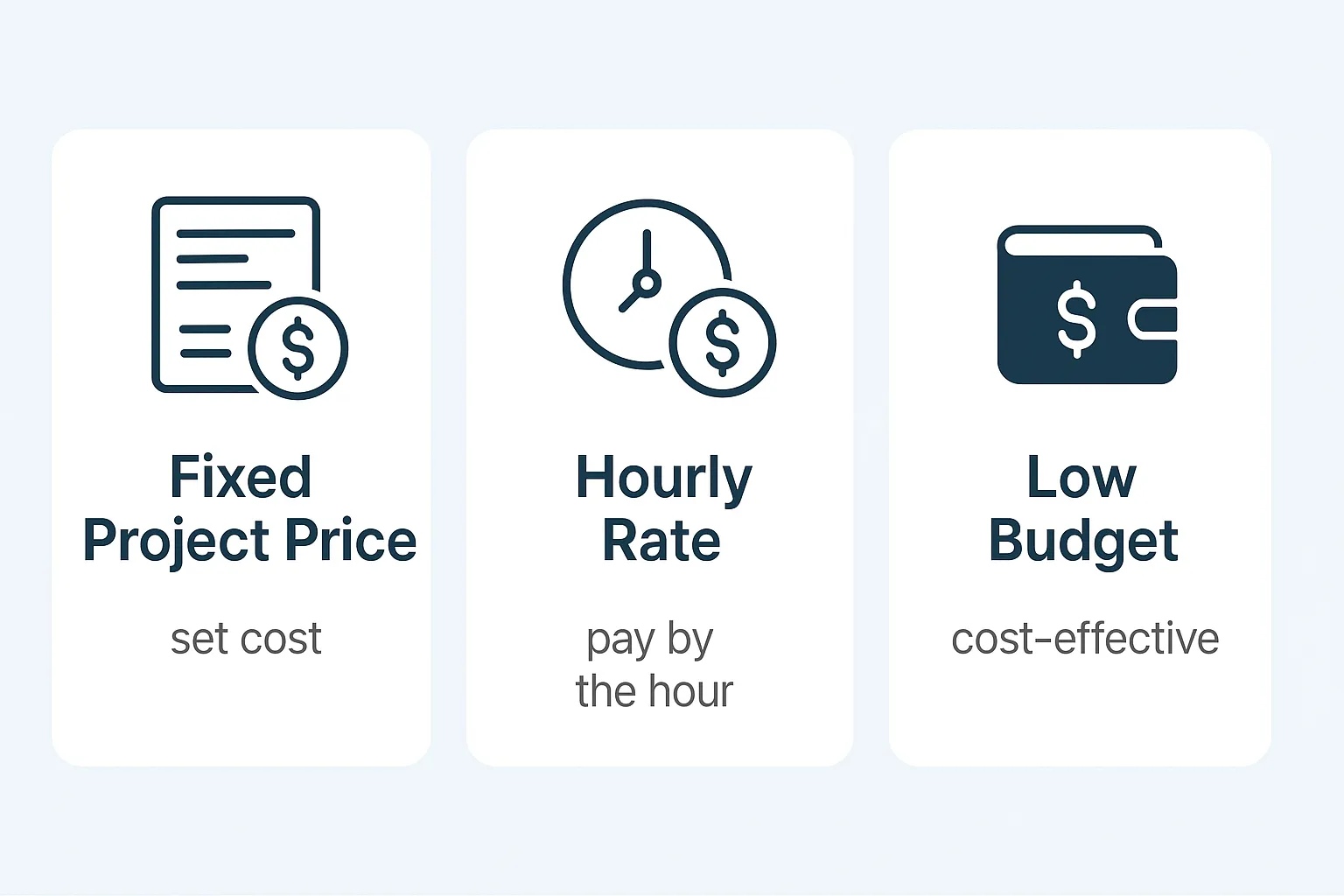
We have two different pricing models when it comes to price for app development: fixed project price and hourly rate.

Fixed Project Price

90% of our clients choose a fixed-price agreement for their app development projects. This approach gives you full cost certainty before development begins. To provide an accurate fixed quote, we first need to understand your app vision—such as the desired features, target devices (phones, tablets, smartwatches, etc.), and design requirements. For larger or more complex apps, creating a prototype is often necessary before we can offer a precise quote.

With a fixed-price agreement, the effective hourly rate is significantly lower—often well below R750 per hour.
In the South African market, fixed-pricing is especially valuable for budget-conscious organisations that need to control costs and avoid overruns. However, achieving this clarity requires a clearly defined scope and, ideally, a detailed prototype.

Hourly Rate

While we generally recommend fixed-price agreements for app development, we also offer hourly rate models for clients who prefer flexibility. Our standard hourly rate is capped at R1,200, with discounted rates available for larger volumes of hours.

This pricing model is ideal for ongoing maintenance, support, or incremental feature updates—particularly when the project scope is fluid or subject to change.

App Development with Low Budget
If you’re working with a limited budget, we offer flexible solutions to help you get started. One option is to begin with an MVP (Minimum Viable Product), focusing only on the most essential features to test your idea and gather user feedback before committing to full-scale development.
Let us know your budget, and we’ll help outline what’s possible within it. Thanks to our streamlined processes and competitive pricing, we can deliver more value for your investment than many other app development agencies—both in Denmark and abroad.

In South Africa, where cost-efficiency is often a priority, aligning the app’s scope to your available resources is key. By prioritising high-impact features and using efficient technologies like cross-platform frameworks or reusable components, we help you launch a quality product without exceeding your budget.

We’re always happy to consult with you and tailor a development plan that fits your goals and financial constraints.

FAQ’s

We often hear the question “how much does it cost to have an app developed?” Here is a breakdown of local pricing examples:

  •  A small app costs between R45,000 to R90,000
  • A medium app costs between R95,000 to R375,000
  • A large app costs R390,000 to R750,000
  • A very large app starts from R800,000 and can exceed R1,250,000

Factors affecting cost include app design, features, supported platforms, and the technologies used.

Start-up costs for an app vary depending on the project scope. We always recommend preparing an interactive clickable prototype before beginning development. This provides 100% clarity on pricing, timelines, and features.

In South Africa, prototype costs typically range between R15,000 and R45,000, depending on the number of screens and functionality.

Monthly costs depend on several operational factors, including:

  • Hosting, backend infrastructure, and third-party licenses
  • App store subscriptions and developer accounts
  • Maintenance, updates, and bug fixes (included with us)
  • Additional development work (billed hourly)

Budget approximately R2,000–R10,000/month depending on complexity and required support.

Developing an app involves costs, but you can choose to make your app free in the store, monetise via in-app purchases, subscriptions, or one-time payments. In South Africa, many start-ups launch free apps to grow user adoption, then monetise through value-added services.
With us, a simple app costs between R225,000 and R650,000, depending on functionality, design, and supported devices.
You need a clear idea and business goal. Development then requires:

  • Skilled developers and designers (or an agency)
  • UI/UX design, backend architecture, and analytics setup
  • QA testing, launch planning, and marketing

Agencies like iSolve Mobility offer an end-to-end service covering all these aspects.

Our hourly rates range between R250 to R450/hour.

This enables cost flexibility depending on project size and complexity—offering more value compared to global averages.

Publishing an app on iOS requires joining Apple’s Developer Program at $99/year (±R1,900).
Google requires a one-time developer account fee of $25 (±R470). You can publish multiple apps with no further fees.
You can:

  • Learn to code and build it yourself
  • Use low-code/no-code platforms like Appy Pie or Thunkable
  •  Hire freelancers or agencies for a full-service solution
There are different options:

  • Agencies – offer complete development, testing, and launch services
  •  Freelancers – suitable for smaller budgets but may lack full-spectrum expertise
  • DIY builders – good for simple prototypes but limited for scalable apps

Building an app is like constructing a house—you need experts from multiple disciplines.

Yes, anyone can start app development, but building a successful product requires understanding of design, development, security, user experience, and platform rules. Working with an experienced agency reduces risk and improves product quality.
Typical development timelines:

  • Small app – approx. 20 working days
  • Medium app – approx. 62 working days
  •  Large or multi-platform app – up to 108 working days

Project readiness and complexity significantly influence delivery time.

Yes. Even experienced developers face complex challenges in coding, integration, design, and compliance. Partnering with a competent team helps you navigate these hurdles effectively.
We develop apps for:
• Smartphones (iOS and Android)
• Tablets
• Smart Watches
• Smart TVs
We use:

  • Swift for native iOS development
  •  Kotlin for native Android development
  • C# for cross-platform development via Xamarin/MAUI
Once your app is completed and payment is received, you own 100% of the source code. You’re free to continue with us, another vendor, or manage it in-house.
Depending on the platform, your app can use:

  • Bluetooth
  • GPS and location services
  • Camera access
  • Beacons
  • Push notifications, and more

Different device types (e.g., tablets, watches) offer varying capabilities. We’ll advise on what’s technically feasible and strategically appropriate.

Read more
Improve team communication in the business through mobile apps.

Improve team communication in the business through mobile apps.

in Blog with Comments Off on Improve team communication in the business through mobile apps. by

Improve team communication in the business through mobile apps.

The spread of COVID-19 has led to unprecedented measures, first by governments and then businesses, trying to limit the spread of the corona virus. In addition to restricting travel and cancelling large events across South Africa and the world, countless people were actively encouraged to work from home.

Working remotely under these circumstances meant adapting to a new environment, with the result; a growing number of companies needing to rethink their ways of working and communicating.

In order to continue working efficiently and creating value under these new circumstances, organizations need to understand, accept, and support their employees’ specific situations and needs.

One factor that can influence all of these things is your employee’s mobile apps.

Why is team communication important?

It’s no secret, teams that communicate well complete projects quicker and more efficiently than others. Research shows that three people working together is more effective than one person. When communication is effective team members understand their roles and what needs to be done.

According to a survey by Salesforce, 86% of people attribute workplace failures to lack of collaboration. When working with a remote team, having the right hardware – such as an interactive whiteboard alternative for example, and effective communication applications are of utmost importance.

Now consider the fact that 83% of the world’s workforce is mobile and does not use company email. These workers don’t work primarily at a desk or computer, either––leaving ample room for miscommunication, and missed communication.

Yet it can be safely assumed to have their phones on them at all times.

Whether your company has 50 employees or 5,000, a focused internal communication strategy is a key ingredient for success. From frontline workers to management, a team communication app provides equal access to information, which builds teamwork and drives productivity.

Overall, team chat apps are used by organisations for three key reasons — they save time, encourage collaboration, and increase productivity. Team communication apps allow you to keep all your businesses’ communications in one place which makes it easier for everyone to keep open team communication going, to stay on top of work, check progress and share files.

As a communicator, that means that every time you forgo utilizing employee communications apps on mobile devices as a part of your strategy, you’re throwing your resources in with a declining trend and forcing your employees to change habits.

Your time and budgets aren’t endless — so why not use them to take advantage of a growing opportunity?

What are team-based messaging applications?

To start, let’s look at a definition of team-based messaging applications.

Team based messaging applications is software that can be used on any electronic device – mobile phone, laptop, tablet, or interactive display – that focus on instant messaging and voice and video call, but with the crucial element that they are centred on team chat.

This means that IM groups and remote conferencing can all feature in these team-based messaging applications.

Why should you use mobile applications to improve workplace communication?

As a centrepiece of our modern lives, mobile devices have made personal and business communication easier than ever. Communicating with friends or even potential new clients hundreds of kilometres way is as simple as sending a text or chatting via video apps like Snapchat and FaceTime.

Here are a few keyways that an internal mobile app will overhaul and enhance a company’s communication in the workplace.

the latest communication trends

1. Real time communication

Time is a company’s most valuable resource. When a company needs to communicate effectively, time is of the essence. It can also be said that adequate time is the hardest resource to obtain.

With a mobile messaging app, communication is significantly improved in real time, by providing information in an easily accessible manner. Team members can send short snippets of information back and forth without clogging up their inboxes. For example, thanks to push notifications, which can be either user-specific or companywide, all employees will be aware of the latest updates and important news.

Examples of real-time information that apps help distribute in a more efficient way include:

  • Essential company news and updates
  • Company safety and security announcement
  • Parking and shuttle bus information
  • Corporate directories
  • Workforce-Wide Unified Communications
  • And more

2. More Efficient Workflows

Consider Domino’s Pizza for example with over 14,000 storefronts worldwide. Human Resource used to handle all communication to managers and frontline staff, such as food delivery information and scheduling via email, which proved time-consuming.

By utilising Beekeeper, an internal communication platform and app Domino’s delegated much its communication through this, allowing HR to focus on other people management priorities.

3. Task Management Features

A work messaging app should provide more than text messaging does. Sharing information through a team communication app empowers employees with the ability to answer customer questions, set up a recurring to-do list, and track progress towards long-term targets, develop new task lists and assign action items to co-workers and tag them so they get an instant notification, making it easy to track the overall progress in any project.

This improves employee experience, leading to better customer service and ultimately, better customer loyalty.

4. Employee feedback and engagement.

With an internal app, companies may wish to include modules that can be added for special events or communication initiatives. For example, a mobile app is a great way to collect employee feedback and/or have them take surveys. In this way, apps can be used to collect valuable information, not just disseminate “need to know” info.

This valuable feedback allows a company to improve policies and procedures to keep employee engagement a priority.

5. Centralised information resource

Keeping track of company data and correspondence is overwhelming when internal communication is spread out across an information highway of email, paper, and verbal correspondence.

A team app can centralize internal communication and information such as schedules and pay slips, or general company news, in a user-friendly, secure team communication app and portal where employees can access it easily.

6. Eliminate the Hierarchy Gap

Without an internal communications strategy, the relationship between management and their frontline workforce suffers. The vast majority of mobile workers say they hear from the corporate office only a few times a year, and only when big announcements are made.

A team communication app provides multiple paths, such as activity streams, chatbots, and group chats, to ensure your entire workforce has access to the same information.

When a previously non-digitized segment of the workforce is suddenly given access to information they can access at will, they feel more like a valued member of the team. Studies have repeatedly demonstrated that satisfied employees engage more with their colleagues and work harder.

7. Automatic Reporting Features

Who wants to go through stacks of unorganised data to get the reports they need?

The best work messaging apps automatically records individual and team performance and generates the necessary numbers and customisable reports, about your most important goals that anyone can easily understand.

Intuitive business applications let team members customise what types of reports they receive and determine how often they receive them. Leaders can automatically get emails that outline the progress towards individual team members’ tasks and departmental targets providing them with the ability to make good business decisions, anytime, anywhere by providing insights regarding how to reach those goals.

When choosing a team communication app what should you look for?

There is an ever-growing number of team communication apps to choose from — and for good reason.
Real-time communication is an essential business tool for collaboration, team productivity and knowledge sharing, especially as workforces become more dispersed across cities and even countries.

How do you choose?

Companies should choose software that meets their individual needs. To help you find the right app for your team, we’ve put together 5 five key factors to consider when evaluating your options.

1. Ease of Use

Ease of use on mobile is particularly important for frontline workers who rely on mobile devices on the job and don’t have the time to deal with complicated apps. Also consider the various age-groups of your employees, each comes with their own technology comfort levels and work habits.

Navigating these differences means finding an app that is familiar and easy to use. Without high adoption, you won’t be able to leverage the true value of real-time communication.

2. Multiple Modes of Communication

Not every app supports every mode of communication. There are intranets, video conferencing apps, employee alert systems; instant messaging apps, the list goes on.

The problem? Teams need to communicate in a variety of modes and it’s frustrating when you have to juggle multiple apps, especially if you are on the road or client facing.

When choosing a team communication app or software product look for one that combines multiple modes of communication into one platform.

3. Powerful Group Capabilities

An effective team communication app will allow you and your employees to organize conversations into manageable groups, based on task, departments, and job functions.

Groups allow you to keep conversations focused on a specific topic with all the right people. Typically, each team or department will have its own group, as well as groups for specific projects and events as well as a few fun social groups.

Key group features to look for are the ability to:

  • Create open groups that anyone can join, as well as closed groups.
  • Provide access to the company directory to generate groups that match your company structure/functions.
  • Mute conversations that aren’t critical.
  • Share files and start conference calls between groups.
  • Search for old conversations and files, on all the groups.
  • All users to create short-term ad-hoc conversations.

4. Administration

It’s crucial for your team communication app to provide central administration so you can easily manage groups, provision users, and set data management policies.

Administrative power is a significant differentiator between enterprise apps and consumer apps.

With proper administration, you have control over your data, can ensure the platform is configured to meet your needs and most importantly, you can immediately remove all access to the app and its data when employees leave the company.

5. Workflow Integrations

The best team communication apps must allow you to communicate in the context of work being done. Integrations into key workflow systems must allow for a seamless experience that doesn’t require users to bounce between platforms while collaborating.

6. Pay attention to privacy options

Collaborating with teams doesn’t mean all conversations and files should be public.

Sometimes, you’ll want team members to have private conversations or work on sensitive projects. Make sure you look at privacy options before you choose a service.

7. Opt for the cloud

Cloud-based technology has many advantages.

Most notably are version control headaches, by allowing you to see recent edits and activity. All information is stored online so everyone can be on the same page, no matter where they are.

8. integrations and compatibility

Integrations are key. Compatibility is also important.

Look for tools that seamlessly integrate with other apps or backend software. For example, your tools should support all the file types your team normally uses.

Conclusion

Remote working arrangements or work-from-home have been common in many organizations for years, aided by constantly growing and improving technical tools. However, the COVID-19 crisis has fast-tracked the number of teams working virtually. Still, the transference from workplace management to virtual management can be tricky.

Managing virtual teams is fundamentally different from regular work teams. It needs planning, coordination, and intentional management.

And while remote communication can be tricky, with the right tools, it becomes a piece-of-cake!

Read more
What is the future of mobile app development and communication?

What is the future of mobile app development and communication?

in Blog with Comments Off on What is the future of mobile app development and communication? by

What is the future of mobile app development and communication?

Fifty years ago, the communication tools we rely on today were only science fiction. Today, on even the most basic smartphone you can make calls, watch video’s, listen to music, surf the Web, play games, run applications and accomplish more than most speculative science fiction writers dared to dream.

We’ve become accustomed to using our smartphones for everything from listening to music, taking pictures, reading news and posting on social media to shopping and making financial transactions. For many people, smartphones have taken the place of once common everyday implements like tape measures, flashlights and wristwatches.

But with technological progress moving at breakneck speed these days, it’s strange to think that the smartphone, and how we communicate as we know it has a limited life expectancy.

So, what’s next?

Smartphones and mobile devices will look different

In the short term, we’ll likely see basic cell phones slowly fade away. As smartphones become more common and less expensive, more people will adopt them. In the future your smartphones will also look and serve you in a much different way than it does now.

Which leads to the big question; what’s going to replace the smartphone? Advances in technologies such as virtual reality, augmented reality, artificial intelligence, flexible frames, holographic displays and wearable electronics will spawn a new generation of devices that could change our everyday existence even more than the smartphone did.

It’s a pretty safe bet to say that they won’t be palm-sized rectangles with glass screens — or any screen at all, for that matter. And they may not even be a single gadget. Some futurologists predict that the smartphone will give way to personal area networks — clusters of tiny gadgets concealed in beads in a necklace or built into eyeglasses or contact lenses.

The fact is clear, the transition we’re about to experience is that we’re going to go from accessing the internet to living in the internet.

5G Technology

It’s been nearly a decade in the making, but 5G is finally becoming a reality in South Africa. Vodacom started rolling out its 5G network to Johannesburg, Cape Town and Pretoria in early May 2020.

5G is the 5th generation of mobile networks, a significant evolution of today’s 4G LTE networks. 5G has been designed to meet the need for faster connections, greater capacity due to the very large growth in data and connectivity of today’s modern society, the internet of things with billions of connected devices, and tomorrow’s innovations.

So, what will 5G enable? There are three major categories of use case for 5G:

  • A basic app an application with simple functionality that requires approximately 350-700 hours on development.
  • A medium complexity app takes from 700 to 1,000 hours.
  • A sophisticated app, with a backend and api integrations in most cases, exceeds 1,200 hours on development.

Cost:

  • Massive machine to machine communications – also called the Internet of Things (IoT) 5G, has the potential to impact various industries and revolutionise modern industrial processes and applications including agriculture, automotive, healthcare manufacturing and business communications.
  • Ultra-reliable low latency communications – Low latency communications also opens up a new world where remote medical care, procedures, and treatment are all possible. It will allow for the mission critical control of devices, industrial robotics, vehicle to vehicle communications and safety systems, autonomous driving and safer transport networks in real-time.
  • Enhanced mobile broadband – providing significantly faster data speeds and greater capacity keeping the world connected.
  • New revenue streams – It has been observed that the 5G network has the possibility to unlock up to $12.3 trillion of revenue, crosswise a broad range of telecom industries.
  • Creating new growth and jobs – It is predictable that by the year 2035, the output from the global value chain of 5G (network operators) will be superior to what the entire mobile value chain is at present.

What will the benefits be?

  • For communities – 5G will enable the connection of billions of devices for our smart cities, smart schools and smart homes, smart and safer vehicles, enhance health care and education, and provide a safer and more efficient place to live.
  • For businesses and industry – 5G and IoT will pave the way for cost savings, better customer experience and long-term growth, as a result off a wealth of data allowing them to gain insights into their operations like never before. Businesses will operate and make key decisions driven by data, innovate in agriculture, smart farms and manufacturing.
  • New and emerging technologies – Virtual and augmented reality will be accessible by everyone, providing shared and connected experiences that were not possible before.
Although 5G will undoubtedly change the way we interact with each other and consume media, the change won’t happen overnight. It will be a few years before 5G is up and running smoothly across the whole of South Africa.

Trends that will define the Future of Mobile Application Development

Technology has always been a step ahead of expectations but what can’t be predicted is where the change will come from.

It is an undeniable fact that data is the future of mobile communications. While most of today’s services are already based on this premise, even voice calling, as we know it today, is guaranteed to become obsolete in the coming years. This means that no matter what people do on their device, businesses will need to create an app for that.

Moreover, since this transformation brings convenience for users and a whole set of benefits for businesses, to capitalize on these opportunities, executives must take bold action to transform their businesses.

So, what can we expect?

1. Artificial intelligence (AI)

Artificial intelligence has penetrated our mobile world, and everyday we are seeing more advancements in mobile AI. You may be familiar with some of these:

  • Alexa
  • Siri
  • Cortana
  • Google Assistant

Not only can and will AI software help developers and marketers learn more about the user, ultimately, they will use this technology to extract insights about your users for attaining the output you desire.

2. Wearable Devices

Wearable devices connected with smartphones will open up new opportunities for vendors, app developers, and accessory makers.

These gadgets will communicate with mobile applications to deliver information in new ways, it also means that the smartphone will become the hub of a personal-area network consisting of wearable gadgets such as on-body healthcare sensors, smart jewellery, smart watches, display devices and a variety of sensors embedded in clothes and shoes.

This in turn will enable a wide range of products and services in areas such as sport, fitness, fashion, hobbies and healthcare.

Take Fitbit as an example. All the movements of a person wearing it can be tracked through an app. Users can check their heart rates and how many miles they walked in a day, among other things.

By syncing with mobile devices, these apps can be used socially as well. People can compare their progress with their friends and make it a competition.


3. The Internet of Things (IoT) and mobile connect smart devices

Gartner says there will be 26 billion connected devices by 2020 which includes several hundred smart objects that will all form part of the Internet of Things and will communicate through an App on a smartphone or tablet.

These domestic smart objects, such as LED light bulbs, toys, domestic appliances, sports equipment, medical devices and controllable power sockets etc. will all be remote controlled by smartphones and tablets, displaying and analyzing information, interfacing with social networks to monitor “things” that can tweet or post, paying for subscription services, ordering replacement consumables and updating object firmware.

4. M-Commerce

M-Commerce is here to stay, and most if not all technology and financial analysts believe positive trend in mobile purchases will continue over the next few years as more and more consumers adapt to m-commerce.

Increasing popularity of Tap and Go, SnapScan and other mobile payment gateways will facilitate purchases using the mobile phones instead of debit or credit cards. This will require developers to build a mobile application that can process transactions without the need of physical debit/credit cards or cash.

Coupled with wearables that can process payments m-commerce will take a different shape. Beyond data collection and predictive analytics, wearables will also play a key role in the future of mobile payments and customer loyalty.

5. Motion and location sensing and tracking

Knowing an individual’s location to within a few meters is useful for providing highly relevant contextual information and services such as games, vehicle navigation, and fitness apps, not to mention for security and emergency medical assistance services.

Most mobile phones have location sensor capabilities which use multiple positioning methods to provide different granularities of location data. In the future technologies such as smart lighting will also become important. Precise indoor location sensing, combined with mobile applications, will enable a new generation of extremely personalized services and information.

A very topical example would be the Covid-19 pandemic, and how the Chinese government is using tracking apps to try and keep the spread of Covid-19 in check while the country moves toward lifting the lockdown.

For the full explanation on how they are doing it please see here.

6. Innovative mobile user experience design

Remember when everyone was going crazy about Pokemon Go? The entire premise of that game was based on augmented reality on a mobile device.
We found some mind-blowing statistics about the game and how successful it was:

  • over 800 million downloads
  • more than 5 million daily active users
  • $1.2 billion total revenue

Those numbers speak for themselves. Based on the success of apps such as Pokemon Go, Snapchat, and Instagram, more businesses have been trying to incorporate augmented reality into their mobile technology.

On the other end of the spectrum you will find virtual reality, which is not quite the same as augmented reality. You’ll need more than just a smartphone to experience virtual reality.

Typically, a helmet or some type of goggles gets used simultaneously with your mobile device. This technology may even come with a joystick or controller.

It is a given that effective display of data and content on your mobile user interface will gain increased importance for a sound user experience. This means that all organizations will have to master new skills and work with new partners to meet growing user expectations

7. Enterprise mobile management and mobility

Enterprise mobile management (EMM) is a set of people, processes, and technology using mobile computing for streamlining businesses. The main dimensions of EMM are security, application management, workflows and financial management.

We predict; the market for Enterprise Ready apps and mobile services will grow hugely in a few years to come. Such tools will mature, grow in scope and eventually address a wide range of mobile management needs across all popular Operating Systems on smartphones, tablets, and PCs.

The skills required in building enterprise apps are in greater demand than ever now compelling businesses to take mobility seriously. Businesses should keep an eye on these trends to align their mobile application development strategies.

In Summary

Though the future of telecommunication and mobile app development sounds very progressive, and certainly is impressive, these are still just a few changes that we predict will occur in the future, in a few years to come.

Next-generation personal communication devices may also change us in other ways that we haven’t yet envisioned. As with the smartphone, we’ll just have to start using them to find out.

One thing you can be sure of is that the app development industry will keep on growing always, and every time it grows, takes a new leap, it will open more opportunities, more development, and a brighter future for one and all.

Read more
Qualities of a mobile app development company

Qualities of a mobile app development company

in App Development, Blog with Comments Off on Qualities of a mobile app development company by

Qualities of a Mobile App Development Company

Are you planning to build a mobile application for your business? Do you want to get it done from the best team of professionals? Are you thinking to hire a mobile application development company? If all the answers are positive, you are reading the right post.

In a world where developers can now be found everywhere and most of them always claim to be the best mobile app developers, identifying the actual top mobile app developers in Johannesburg and Pretoria or South Africa for that matter is a tough task.

One of the biggest challenges’ businesses face is not knowing how to choose the right app development company – one that really understands your project and empowers you to build a successful app.

It is important not to rush the process of hiring an app development company, instead spend an adequate amount of time to thoroughly consider all your options. Spending the effort upfront to comprehensively consider your development options can save you a lot of headaches, time and money further down the road.

But what qualities should you look to find in an exceptional developer? Let’s find out.

1. A top-notch website

Obvious as it might seem an app agency with a poorly designed, unintuitive, uninformative, inelegant, or outdated website – is not one you want to entrust your big idea.

Conversely, a well-designed, easy to navigate, highly informative website that tells you all you need to know about the company’s mission, values, services and portfolio, is one you just may be able to entrust your vision with.

A company that pays attention to the details is worth putting your confidence in.

A top-notch website

2. A proven track-record

There’s a reason everyone runs to Eat Out, Zomato and TripAdvisor before going to a restaurant:

“We trust other people’s feedback and opinions”

Just like restaurants, the best app agencies always have a few past clients who will rant and rave about their work and abilities. Good app development companies have proven track records and their clients give positive testimonials about them.

Any app agency worth their salt will have case studies and examples of apps they’ve developed. Take a look through each agency’s portfolio to see if they’ve worked with brands in your space. Chances are, if they’ve built quality apps for other entrepreneurs, they’ll do the same for you.

Look at dedicated websites like ClutchGoodFirmsToptal, and App Futura which contain profiles of app developers, including their portfolios and, most importantly, reviews of their past work.

Be sure to read their reviews on Google My Business and LinkedIn but also reach out to clients of the agencies you’re looking into and ask what it was like working with them.

Any app agency worth their salt will have case studies and examples of apps they’ve developed

3. Quick and effective communication

After narrowing down prospective app agencies based on websites and reviews, you’ll want to begin reaching out to the companies that made the cut.

Working with an app agency requires constant communication, so you’ll want to pay close attention to how accessible these agencies are. If a mobile app developer cannot communicate well, the project may not make it very far, poor communication will lead to delays, misunderstood requirements, rework and bugs

Do they make the effort to develop a working relationship? Do they get back to you in no time, or are you left waiting for weeks? Do they respond politely and eagerly, or do they act as though you’re pestering them? Chances are, if they’re not responsive and easy to reach at the outset, they won’t be when you need them most.

Working with an app agency requires constant communication,

4. Teamwork and company structure

Mobile app development involves several stages, from planning to actual code writing, then to after-care service. Every department has a part to play. The quality of the service that is delivered is dependent on the level of teamwork in the company.

Being able to work in a team environment is paramount to an application’s success in the market. The apps need to work well across all functions as well as look good. This requires many different skillsets across the board.

During your initial discussion with a prospective app agency, ask questions about the structure of the company and the people behind the scenes. Every app agency should have quality individuals in each of these roles:


  • Project Manager/Strategist– Every team or project needs a visionary at the top responsible for capturing and executing the vision of the app. This person must have a solid technical background, extensive knowledge of the targeted industry, great managerial skills, and a keen sense of responsibility.

  • Designers – The designers should be adept at planning navigational functions and creating visuals. They should be open and receptive to feedback and changes.

  • Developers – The developers should be experienced in a variety of platforms, such as Java or C++ for Android and Objective-C or Swift for iOS.

  • Quality Assurance Experts – Not to be overlooked, QA experts – the ones who test the entire end product – should be capable of pointing out areas for improvement and suggesting ways to go about it.

  • Sales and Marketing Professionals – The sales and marketing professionals turn the product into profit and make sure all of the effort that went into creating it doesn’t go for naught.

UI/UX skills are highly necessary to be a top app development companies in South Africa.

5. Creativity and User Experience

UI/UX skills are highly necessary in order to be one of the top app development companies in South Africa.

Regardless of your app idea, chances are there are dozens, if not hundreds, of similar apps available in the different stores. Having a powerful UI/UX skills is necessary to help you stand out from the fray.

It is not enough that an app works well, if a mobile app developer is not very creative, their work will not wow the end user. The more a developer can catch the eye of the user, the more successful the app will be.

Mobile app development involves several stages,

6. Understanding client and the market needs

With hundreds of mobile applications being churned out daily, a mobile application developer has to exhibit a clear understanding of the industry, especially the market needs.

It may sound like a no-brainer, but a good app development company should be able to get your idea, as well as take the extra step of analysing the needs of your potential customers and market. They try to understand what the users will be interested in and they go all out to bring that expectation to mobile reality. An app that meets users demand is an app that will sure help a business to be successful.

Understanding client and the market needs

7. Knowledge of cross-platform development and programming

Mobile app developers that have multiple programming languages in their tool belt as well as knowledge of cross-platform development, are the qualities you should be looking for in a top app development company.

There are several programming languages that can be used for mobile app development; Java, Objective C, Swift, PHP, Python etc. Each of these languages has its pros and cons and have areas where they can be best applied. Good app development companies are knowledgeable, and are proficient, in a wide range of programming languages. This proficiency will help a company to stand out and deliver better quality mobile applications.

Similarly, before hiring the mobile app development company, it’s good to make sure that they are an expert in the platform you want the app for. It can be android or IOS, but they should be well-versed on the technology for which you want the app to be developed for only then you will get a quality article. Because the developing process of both the platforms is different, this question must be asked. Same goes for the cross-platform app which means developing an app for both the platforms.

Knowledge of cross-platform development and programming

8. Look for an end-to-end process

The most successful app agencies have a process, a formal series of steps they follow as they design and build apps.

It is utmost necessary that your app is scalable and flexible enough in design and coding aspects. The app development process must be able to adopt the changes, suggestions, and feedback laid down by the project team which is in coherence with brand and services.

Before signing a deal with an app agency, understand whether they have a process, and how frequently they update you about the process of development.  Avoid agencies that don’t have a process as that can be an indication that the steps between idea and reality are going to be messy.

The app development process

9. Timeline

Ask about the estimated project timeline. More importantly, ask about their availability as most companies will be working on multiple projects at a time.

How many projects are they currently working on? How long do they think the project will take? When can they deliver your project by? It is important to confirm that there are dedicated resources available to work on your project.

This way, you can ensure that the company can efficiently respond to any iterations or unforseen challenges of your project.

estimated project timeline

10. After-care service and maintenance:

One of the key qualities that differentiate an average mobile app development company and a top company is the quality of after-care service that each offers.

There is a good chance that after your app is launched in the marketplace you will have to, from time to time, release updates, fix bugs or add new features/functionality. For this reason, it is important to understand a company’s policy around app maintenance and support.

For example, ask whether app maintenance is charged at an hourly rate or a monthly fee for ongoing support. Be sure to determine what the policies are for:


  • The cost per each new app release

  • How they specifically handle bug fixes

  • Their post-launch support


You will want to work with an app agency that’s committed to your success – one that will remain responsive and willing to make changes to improve the app’s functionality and aesthetics after initial launch. In your initial discussion, ask whether the agency is interested in working with you beyond the initial launch, and in what ways they might help.

Conclusion

In this article we described five attributes to seek when looking for a mobile app developer. Creativity, ability in cross platform development, multiple language experience, being a team player and an excellent communicator are top qualities for a mobile app developer.

Much like a hiring manager reads between the lines when interviewing job candidates, you’ll be doing the same when effectively interviewing app agencies. You can learn a lot by looking at an app agency’s website, portfolio, and online reviews. You can also learn a lot by asking an agency about their company structure, history, and team. Also, be sure to ask other app developers who have used a particular agency’s services for insights into what the process was like. The more digging you do, the better informed you’ll be, and the more likely you’ll be to choose the right agency to build your app.

Read more
What to Build First: An Android or iOS App?

What to Build First: An Android or iOS App?

in App Development, Blog with Comments Off on What to Build First: An Android or iOS App? by

Four and a half billion people. That’s the global digital population in April 2019 according to  Statista.com of which almost 3 billion active mobile social users. This is a market you can’t ignore.

If you still don’t have a mobile app for your business, then it’s high time to get one. But which platform should you focus on for your project?  iOS or Android development; the battle is ongoing and probably will never conclude.

If you look at the global mobile app market, the numbers are staggering:

 State of Mobile 2019 market report

[Source: App Annie]

Many companies struggle to decide what platform they should use to develop their app. There are many factors to consider; while apps developed on the iOS platform consistently earns more revenue compared to Android, Android has a much larger global market share. However there is more to the story, and we need to dig deeper to understand what is better iOS or Android.

Demographics


One of the first questions you should ask is who is your target audience and where do they live?

The primary consideration is where your first app adopters will be located. If your customers are outside of the U.S., Europe, or Australasia, it’s possible that Android should be your first priority as it dominates sales volumes of smartphones in Asia, Africa, and South America.

Knowing this will help you prioritize your development requirements and possibly save some money in the meantime as well.

When looking at the worldwide statistics for sales, Android has a clear lead over iOS in terms of market share. Android currently holds the largest global platform share with around 75% which mostly comes from developing countries and lower income areas compared to iOS’s 23% from developer nations.


Demographics tells us a lot about Android and iOS users


Demographics tells us a lot about Android and iOS users. This is where we need to start the discussion.

iOS users are typically younger, with a higher level of education, greater engagement and earn more money, so they spend more per app. Amusingly, iPhone users were also found to be vainer — taking 12 selfies every day, which is five more than Android users take.

Android users are less extroverted than iPhone users, and they are perceived to have greater levels of honesty and humility. In a survey, by Slickdeals, Android users were reported as self-admittedly the more frugal in their spending habits, with Android users being 25 percent more likely to strongly agree that they think they are a frugal person, and being 19 percent more likely to say they look for deals and discounts “often.”


iPhone Users
37% more likely to have a graduate degree
29% more likely to be older women (35+)
14% more likely to be extroverted
67% more likely to make over $200K and enjoy spending it
More likely to be in Media/Marketing/Business
39% more likely to be high-maintenance
50% more likely to have visited more than 5 countries
[Source]

Android Users
80% more likely to have only a high school diploma
More likely to be younger men (34 and younger)
12% more likely to be introverted
24% more likely to earn $100K or less
More likely to be in IT/Energy/Utilities
12% more likely to be pet lovers
71% more likely to have never traveled abroad


Users approach to technology

The second point to consider would be the adoption of new technology.  According to a poll conducted by Hunch.com, iOS users are more likely to be early adopters.

On the other side of the spectrum, Android users seem to be late adopters which means they are less likely to own mobile devices that will allow apps to utilise rich new technology and features to deliver an improved user experience and functionality.

Given the fragmentation of handheld mobile devices running Android as an operating system, the issue becomes even more compound.

Revenue Models


Another factor one needs to consider when deciding on the platform is app monetisation.  The capability of a mobile app to generate profit (if that is your business goal) depends on a number of things, including the platform on which it has been created. If you are thinking that just because Android has a bigger market share it also generates larger revenue, you should think again.

According to a report from Sensor Tower, the App Store earned nearly 93% more than Google Play in quarter 3 of 2018, the largest gap since at least 2014.

The firm states that approximately 66% of the $18.2 billion in mobile app revenue generated in Q3 2018 came from Apple’s App Store. The store made $12 billion in the quarter, up 23.3% from the $9.7 billion it made during the same period last year.

q3-2018-app-revenue-worldwide

If app monetisation is one of your goals, there are some key platform differences to be aware of.


  • Android users tend to be less willing to pay for apps than iOS users, so free apps with in-app ads are more common.

  • While Android has a higher percentage of ad-supported apps, the iOS development platform relies predominantly on purchases.

  • Apple users are more likely to make in-app purchases and spend more on them.

  • Apple users are more likely to pay for apps, except in one category — utility apps. Android outperforms when it comes to utility apps.

  • Shopping apps generate the most revenue.

The takeaway: If you want to monetize your app without ads, whether through subscriptions, freemium models, or in-app purchases, then Apple may be your best bet. The same applies to e-commerce apps.

Development Speed and Complexity


Getting your app fast to market is always a primary concern when building the app.

Although Android apps are mostly developed in Java (preferred by most app developers) and related languages, while iOS apps, on the other hand, are normally developed in Apple’s Objective-C language, it still can take 2-3 times longer for Android app development vs. iOS app development.

Why? It has to do with the system release cycles and something known as Android fragmentation.

Simply put, Android runs on a huge number of devices, that come in all shapes and sizes as well as with huge differences in performance level and screen sizes. Because of the limited type and number of devices, iOS development is easier as compared to the development of Android apps.

Add to this the fact that there are lots of active versions of this operating system at the same time. To build an app that is compatible with all of these devices is quite a challenging and complex task. Thus, it's crucial to consider timeframes before you outsource app development.

The differences in SDK’s, IDE’s and API’s is another conversation by itself.

Release & Approval Cycles


iPhone users upgrade a lot more often than Android users.

For example, over 76% of all iOS users have adopted the latest version of iOS 12.3. Pie for Android was released in August 2018, and currently, a little over 10% of all users have adopted it.

Because Android is locked down by telecom carriers and Original equipment manufacturer or OEM’s, releasing new updates to Android becomes more difficult resulting in the adoption of the latest OS versions being usually slower than with iOS.

For developers, there is a benefit to being able to focus on supporting the newest versions of an operating system. With iOS higher adoption rates, developers can stop supporting older versions and devices sooner, reduce testing, incorporate newer API’s and reduce their development cycle times. If only about 10% of the users have adopted it, then the developer has to support older devices, do more testing and this way increase the development cycle time.

As most app developers can attest, Android is the favourite when it comes to the release and approval process. Why? Because with iOS, the release and approval process is typically between 2-3 weeks, and even longer, if the app is rejected. Android apps typically take a day or two to get approved and updates can be pushed within a matter of hours.

The bottom line: The Google Play Store submission is less expensive and less strict when it comes to publishing.

Pros and Cons


Evaluating all pros and cons for Android app development and iOS app development is another factor that can help you define which OS to be the first. Here is a brief overview of the key advantages and disadvantages of both from a development and marketing perspective:

Android Pros


  • Wider international coverage, including emerging markets.

  • Simpler to launch with Android; guidelines provided are easier to follow, rather than strict requirements from Apple.

  • Getting your app on Google Play is less time consuming.

  • No restrictions imposed on alpha or beta app launch when writing apps for Android.

  • With Android you are able to submit your app to Google Play and Amazon.

  • Various hardware integration and customization possibilities.

  • Deeper market penetration


Android Cons

  • Development and testing usually take a lot of time due to the large number of Android versions and devices.

  • It’s impossible to target all device users at once and tailor the app to all screen sizes.

  • New app features are only supported by newer OS versions.

  • 2-3 higher the development cost

  • High device fragmentation


iOS Pros

  • The iOS platform offers a quicker and more stable development process.

  • iOS users are more likely to purchase apps as well as make in-app purchases.

  • Standardised UI makes interface development less time consuming.

  • The audience is more valuable

  • Tools are more advanced and stable

  • Provides more publicity and press opportunities

  • Many influencers on iOS


iOS Cons

  • Apple’s approval takes a lot of time (7 days on average).

  • With so many restrictions imposed, it is difficult to customize an app.

  • No possibility to release a beta app since only fully-functional apps are accepted.

  • Fewer opportunities to stand out from the pack because of app standardization.

  • Smaller overall install base


Choosing your app development platform: iOS of Android


There are many aspects to consider when choosing a platform for app development.

By now you may have guessed that in general, from a financial standpoint as well as a time perspective iOS is a better choice, but from a market penetration stance Android is better.

The Bottom line: both Android and iOS are extremely successful which is why it’s smart to invest in both iOS and Android app development.

But ultimately, your decision to build for iOS or Android first is going to come down to what works for your business:


  • The type of app you are building

  • Monetization model

  • The market you’re aiming

  • User demographics

  • Project timeframe and budget


If your company is a start-up and your capital is limited, then iOS is the best place to begin because not only is it cheaper iOS also brings influencers and PR with it. Chances are, you'll get much more clicks for your app built on iOS.

If your audience is mostly located in emerging markets, then it makes sense to start with Android since they tend to visit app stores more often.

Read more
The future of progressive web apps

The future of progressive web apps

in Blog with Comments Off on The future of progressive web apps by

The future of progressive web apps

In past few years, the use of mobiles has risen to the point where people now spend twice as much time on mobile devices as they do on desktop, and in many African countries mobile phones are the only devices they use.
 
When native apps first came to market, people couldn’t get enough of them. It changed the way people interact with their mobile devices, each other and with companies. The recent trend, however, shows that people are turning away from apps.
 
This should come as no surprise, and come July 1st, 2019, Google mobile-first indexing will now be the default index used by Googlebot for all new websites.
 
Even though users are downloading less apps, they are still an integral part of many users daily live and many brand’s digital marketing efforts. You’d be hard-pressed to find a company that hasn’t thought about developing an app. Given the tremendous benefit and impact that an app can have, why are so many companies not investing in app development?
 
The answer shouldn’t come as a surprise: cost. It can be an incredibly costly gamble if users don’t take to it.
 
The price of mobile app development is undoubtedly the main underlying reason why many companies, especially small businesses, are not investing in the app game, but it isn’t the only factor.
 

The Business Case

The need for businesses to target customers on mobile devices is no longer a discussion point. The question is no longer if they should do it but how and what is the cost?

As a business you have 3 choices if you want to appeal to mobile-based customer:

  • Build a responsive website,
  • Develop a native app, or
  • Create a progressive web app (PWA).

Mobile websites are quick and easy to access, but they tend to be less focussed on great user experiences. Native apps provide great user experience, but they are costly, can be expensive to maintain and require a user to download it. Meaning as a brand you need to generate quite a considerable buy-in from consumers first. Sitting right in the middle are PWA’s. First introduced in 2015 it combines the best elements of mobile sites and native apps while mitigating their disadvantages.

What is a Progressive Web App (PWA)?

Have you ever seen an “Add to Home Screen” banner, or “Install this web app to our phone”, while browsing a website on your mobile device? When you click the button, the “application” installs itself quietly in the background, while you continue with what you were doing. When you open this application, you can navigate and browse with the same experience as you were doing on your browser, but now right in your mobile phone.
 
This is what is called a Progressive Web Application or PWA.
 
A PWA lets you install the application from the browser window itself, is available on your phone like a native app, and works offline, just like a native app. The only difference is you did not have to download and install it from an app store.
 
The term Progressive Web App was coined by Alex Russell and Frances Berrima and simply put the are:
 

“Websites that look and feel like apps, with a wide range of functionality available at low cost and in easy-to-update formats.”

Here are some of the key characteristics that makes them different from traditional web apps and defines a PWA:

  • Most PWA’s work on all modern smartphones, irrespective of operating system.
  • They are discoverable by search engines.
  • They work offline.
  • They generally load faster than mobile websites and can be installed on your home screen.
  • Importantly, there’s no need to visit an app store. Users can download PWAs directly from their web browser.
  • Most PWA’s work on all modern smartphones, irrespective of operating system.
 

How is Progressive Web App different from Regular Web App?

There are several differences and advantages to using a PWA or a native app, we will explore these in more depth in our next blog post.

Following is a short overview of what a Native App is:

A Native App

A regular web app, in simpler terms, is a website that is designed to be accessible on all the mobile devices. It is designed using HTML, CSS, JavaScript, Ruby, etc, and is downloaded from an app store. They offer various native-device features and functionalities, such as access to camera, contacts and photos that PWA do not.

What is the future of PWA or Progressive Web Apps?

Since being introduced in 2015, PWAs have slowly been gaining popularity. But with Google, Apple and Microsoft, the three main phone operating systems, all driving the transition to PWAs due to their inherent flexibility, PWAs are set to become the best way to stay ahead of the curve in the mobile industry.
 
Results have been quite impressive; users of Pinterest’s PWA spend 40% more time on the site compared to the previous mobile website. Lancôme saw an 84% decrease in time until the page is interactive, leading to a 17% increase in conversions and a 53% increase in mobile sessions on iOS with their PWA.
 
What makes 2019 so important when it comes to progressive web apps? Here are our top reasons for optimism:

  • Microsoft and Google have since early 2018 been backing PWAs heavily.
  • Apple has finally accepted PWAs.
  • More and more companies are shifting towards PWAs and are seeing success.
  • PWA’s are no longer a proof of concept or a side project, as more and more web developers are now engaged in progressive web apps development.
  • Progressive Web Apps are a mobile-first approach
  • Progressive Web Apps (PWA) create mobile web experiences that are closer to those delivered by native apps.
  • How Progressive Web Apps improve browsing experience. They offer user a fast and streamlined site, a better user experience, increased customer engagement and offline access

In Summary

Progressive Web Apps are the future of web development without any doubt.

If you’ve been holding off on developing a responsive website or a native mobile app, you are at a unique turning point. Many established businesses have already started the transition from native web apps to PWA’s to effectively replaces a company’s mobile site, its native app and maybe even its desktop site.

In other words, it’s a mobile-first approach to connecting with your customers.

In the future, e-commerce sites, restaurants, and media sources will transition from native app to Progressive Web App.

Read more
Mobile Phone Apps vs Mobile Optimized Websites – which is better?

Mobile Phone Apps vs Mobile Optimized Websites – which is better?

in App Development, Blog with Comments Off on Mobile Phone Apps vs Mobile Optimized Websites – which is better? by

Mobile Phone Apps vs Mobile Optimized Websites – which is better?

It is increasingly evident that companies are becoming more aware of the fact they need to embrace a mobile strategy. Not only has the constantly growing number of mobile devices and the number of mobile-only internet users overtaken desktop, but app usage has also surpassed desktop usage.

As a result of this shift, companies are re-thinking their mobile strategies.

The major question that most companies seem to be grappling with is whether a mobile app or a mobile website is the right way to go. Many will argue that you don’t need a mobile app, you just need a website that looks good and functions well on mobile devices. Others will argue that mobile apps have benefits that a responsive website cannot offer. However, when digging a little deeper, there are a myriad of factors that need to be considered before deciding.

When it comes to mobile app vs mobile website, it can be difficult to determine where to focus your efforts. Why? Because we are talking about two different mediums that allow customers to connected and interact with your company in very different ways and for very different purposes.

In this post, we are not going to tell you which one is better. Instead, we will make you understand the huge difference between these two and the final decision will be yours as to which one you want for your business.
Before going further into this discussion, you should understand that these two elements serve slightly different purposes. Now, let’s get started.

1. Mobile App Vs. Mobile Web: What’s the Difference?

Before you can evaluate the benefits of a mobile website vs. an app it’s important to understand the key differences between the two.

Both mobile apps and mobile websites are accessed via a handheld mobile device such as a phone or tablet. It is also important to know both mobile apps and mobile websites can be accessed on iOS and Android devices (Includes smartphone and tablet users).

A mobile website is similar to any other website in that it consists of browser-based HTML pages and can display text content, data, images, and video. They can also access mobile-specific features such as click-to-call or location-based mapping.

The obvious difference between a standard website and a mobile website is the latter is designed for the smaller handheld display and touch-screen interface. Increasingly, responsive websites are becoming the new standard for website design. A responsive website is not only mobile-friendly, but that can scale to any sized device – from desktop down to tablet and handheld smartphones.

Mobile apps, on the other hand, are applications that are downloaded and installed on a user’s mobile device, rather than being rendered within a browser. Users need to visit device-specific portals such as Apple’s App Store, Android Market, or Blackberry App World in order to find and download apps for a given operating system.

An app can pull content and data from the Internet, similar to a website, or it can download the content so that it can be accessed without an Internet connection. We’ll dive into the pros and cons for each, so you can make a more informed decision when establishing the smartest mobile strategy for your brand.

2. Which is better?

When it comes to deciding whether to build a native app or a mobile website, and which one is better the most appropriate option will all depend on your company or business goals. So, you are the deciding factor here.

If you are developing an interactive game for argument sake an app is probably going to be your best option. But if your goal is to offer mobile-friendly content to the widest audience possible then a mobile website would be the best option. However, in some scenarios, you may want to have both a mobile website and an application, but this will all depend on your business goals.
It is also extremely important to consider:

  • What industry are you working in?
  • What is your available time and resources?
Every industry has its own peculiarities, and it can be so, that only apps can afford to achieve success you need. In general, consumers tend to use mobile web for utility-directed tasks like searching, booking, and purchasing products. When entertainment and communications come into play, mobile apps are, for the most part, a far more favoured alternative.
In addition, it is also important to be clear on your answers to the below.
  • #1 Do you want to reach more users?
  • #2 How often do users interact with your brand a day?
  • #3 Do you need to access phone native features?
  • #4 Do you care about speed?
  • #5 Is your product complex? – E.g. You have data reports to show
  • #6 How often is your user going to use your product offline?
  • #7 What is the size of your budget?
  • #8 Does your product involve navigation or location-based elements? (GPS)
  • #9 Do you think you’ll be improving = updating your app very often?
  • #10 Does your competitor have an app?
Generally speaking, a mobile website should be considered your first step in developing a mobile web presence, whereas an app is useful for developing an application for a very specific purpose that cannot be effectively accomplished via a web browser. But before we move on to the differences between mobile websites and mobile apps, it’s important to point out a caveat: A responsive designed website is not the same as a mobile website.

Quick overview of difference

Responsive Design Website Separate Mobile Website
Cost Easier/cheaper to maintain More maintenance; requires bi-directional annotation between desktop and mobile versions
Site speed Large pages are slow to load on mobile devices Quick page loads on mobile platforms
User experience Pleasing both mobile and desktop users with same interface means not focusing exclusively on the needs of either User experience customized to the benefits and limitations of mobile devices; content customized to mobile users
SEO Single website/URL; content is optimized across all platforms Multiple URLs; each will need its own SEO.

3. A quick overview

Before delving deeper into the benefits of each, below is a short comparison.

Mobile Website Mobile App
Audience Reach Viewable by anyone with a mobile browser Viewable by individuals with the appropriate device
User Experience Limited by bandwidth, technologies and site performance but improving Capable of very robust user experiences
Graphics and effects Limited by bandwidth and technology, but improving Superior. Graphics may be stored locally. Effects and animations are limited only by device computing power and memory
Access to hardware functionality Limited. Device geo location can be utilized Unlimited access. Camera, accelerometer, microphone, GPS, etc
Ease of development Developed with standard web development tools and technologies When built for distinct operating systems and devices (native code), unique programming languages and software development kits are required. Cross-platform solutions are available for deploying to various app stores
Development resources Build once and deploy for all devices Built for individual devices and operating systems. May require multiple developers with different proficiencies
Development cost Typically, but not always, less expensive than app development Typically, but not always, more expensive especially when multiple devices or operating systems are targeted
Ease and speed of implementation Publish as a website. Immediate availability May require a submission process. Users must download and install prior to use
Distribution Viewable with any mobile browser. No distribution required Download and installation required
Installation No Installation required. Web based Downloaded and installed from website or marketplace
Updates and maintenance Easily updated and changes are immediate with a browser refresh iTunes requires a submission process. May require multiple development resources if updates are required for multiple devices and operating systems
Paid app vs free app Difficult. Plus, solutions lack purchasing ease and confidence associated with iTunes App Store and Android Marketplace Easy to charge for apps, using the available app marketplaces
Search optimization (SEO) Can be found through a standard search. Primary website can redirect to a mobile-optimized version when mobile is detected Typically found through an app store search or linked to from a website
Internet or data connectivity Required Can be used offline

4. Mobile App Pros

Despite the many inherent benefits of mobile websites, the use of apps is still soaring in popularity. Why so? Generally speaking if you want any of the following benefits, an app makes sense:

A. Mobile apps provide a superior user experience.

A mobile app takes user experience to a whole new level by combining content, navigation, and integrated mobile device functionality (sound, video, images, location, etc) in a way that optimizes the user’s experience. A native app engages the user beyond the capabilities of a display-only mobile website and provide a more personal, efficient, and responsive overall experience through allowing the user to personalise their experience.

The superior user experience is one reason that mobile device users spend 86 percent of their time interacting with mobile apps compared to just 14 percent using mobile browsers.

B. Mobile apps give you a direct communication channel to your customers.

Once a mobile app has been downloaded to as user’s device, it’s always there, reminding them of your brand even when they aren’t actively engaging with it.

With an app the information you most want your customers to have is right there at their fingertips a tap away. When paired with push notifications information about products, prices, sales, promotions—whatever you want, as a brand you are provided with a level of direct interaction most marketers dream about.

C. Personalisation & customer engagement.

Personalization is about offering individualised communication to users based on their interests, location, usage behaviour, and more. With mobile apps, it’s easy to offer users a personalized experience.

Mobile apps can let users set up their preferences when they originally download the app, and customize it to suit their needs, providing them with more interactive ways to engage with your content.

Rather than looking at the exact same text and images as a website, by prompting users to allow geography-specific content such as special promotions or deals at a particular store location apps can integrate features which allow users to interact with certain components of the app thereby becoming more immersed in your brans.

D. Mobile apps have functionality even when they are offline.

A major advantage of apps over mobile websites, is the fact: customers can access information on your app even if they aren’t connected to the Internet.

You can create maps, how to guides, videos, menus, maps, podcasts, games, and more —there’s no real limit to the offline information you can put into your app.

Mobile apps can run without internet connection. Although many apps require an active internet connection to perform most of their tasks, they can still offer content and functionality to users while not connected to the web.

E. Branding Opportunities

The major advantage mobile apps have over mobile websites is free prime real estate on your customer’s device. Even when users are not actively using a mobile app, they are still reminded of your brand daily, simply because your app icon acts as an advertisement for your brand.

Even though a mobile app exists as an entirely separate entity from a company’s website, it can offer new branding opportunities to users. This means that companies can experiment with new branding tactics and styles with a mobile app.

F. Complex Calculations or Reporting with Visualization

If you need something that will take data and allow you to manipulate it with complex calculations, charts or reports (think financial or scientific tools) an app will help you do that very effectively.

g. Leverage Device Capabilities

Mobile web browsers are getting increasingly good at accessing certain mobile-specific functions such as click-to-call, SMS, device libraries and GPS functions. However, if you need to access a user’s camera or processing power only a native app can interface with the device’s features and hardware, such as the camera, GPS location, and so on.

Having access to the device’s capabilities is particularly important for retail apps as they significantly enhance the customer experience. If there’s a single truth to shopping, it’s that the customer experience matters. Here are just a few of the possibilities only apps offer:

  • Push notifications
  • Tap-to-call/email
  • Device vibration/ alerts
  • Camera
  • Instant and automatic updates

5. Mobile Website Pros

If your goals are primarily related to marketing or public communications, a mobile/responsive website is almost always going to make sense as a practical first step in your mobile marketing strategy.

This is because a mobile website has a number of distinct advantages which are more aligned with top of the funnel activities, such as growing and nurturing a steady stream of new leads, in addition to benefits such as broader accessibility, compatibility and cost-effectiveness.

Let’s take a look at what makes a mobile website a good investment for small business owners:

A. Broader Audience Reach

Because a mobile website is accessible across most platforms and mobile devices it can be easily shared. It’s easy for users to share a URL for your mobile site in an email or text, and it is easy for publishers to direct customers to a mobile website in the same way. It is not as easy to share an app or content within an app.

Unlike a mobile app, which must be downloaded and installed on a mobile device, any customer can access your mobile website whenever they want from whatever device they are using at the time.

B. You only need one version.

Because mobile websites are accessible across all device, you only need to create one version for Android and iOS. With mobile apps, you need to decide which operating system you’ll use, or else develop two versions, one for iOS and one for Android. In this regard, mobile websites are much simpler to develop and maintain.

C. Cost-Effective

Complexity aside, a responsive mobile site is generally more cost-effective to develop than a mobile app. This holds true if you want your app to have a presence on more than one platform.

D. Support and Maintenance

It is usually also less expensive and less labour-intensive to update and maintain a mobile website. Properly supporting and maintaining an app (upgrades, testing, compatibility issues and ongoing development) is more much more expensive and involved than supporting a website over time.

E. You can instantly update your mobile website.

Unlike apps it’s very simple to update the content, appearance, and functionality of a mobile website. Once you make the changes and hit “publish,” the changes are instantly available to anyone who visits the site. For any Small business website designer in Cape Town or anywhere for that matter, this is the preferred route.Mobile apps, on the other hand, require users to download and install updates once you push them out.
F. SEO & Brand Visibility

Although Google is now indexing app content and including apps in some search results, it is generally much more common for mobile websites to show up in search results than for a query to return a mobile app.

Having a mobile-friendly site means you are more likely to rank better, which results in greater brand visibility and higher website traffic.

6. How to make the Final Call

The final call should solely depend on your business goals.

If your mobile goals are primarily marketing-driven, or if your aim is to deliver content and establish a broad mobile presence that can be easily maintained, shared between users, and found on search then a mobile website is your best bet.

On the other hand, if your goal is to provide a user experience that feels more like a gaming interface or a computer program than a website, or if you need access to a user’s phone storage and native functions, then an app is probably going to be required.

It’s also important to remember that a mobile/responsive website and a native app are not necessarily mutually exclusive. Plenty of organizations have both a mobile-friendly public website for their general web presence, as well as a downloadable native app to accommodate more specific requirements. In the end, it’s all about choosing the right tool for the job.

Read more